
If you live in Vancouver, you already know the feeling. You leave the house with smooth hair, walk two blocks in the damp air, and by the time you arrive your hair has puffed up into something you did not sign up for. It is not your imagination, and it is not bad luck. It is basic science, and once you understand what is happening you can actually do something about it.
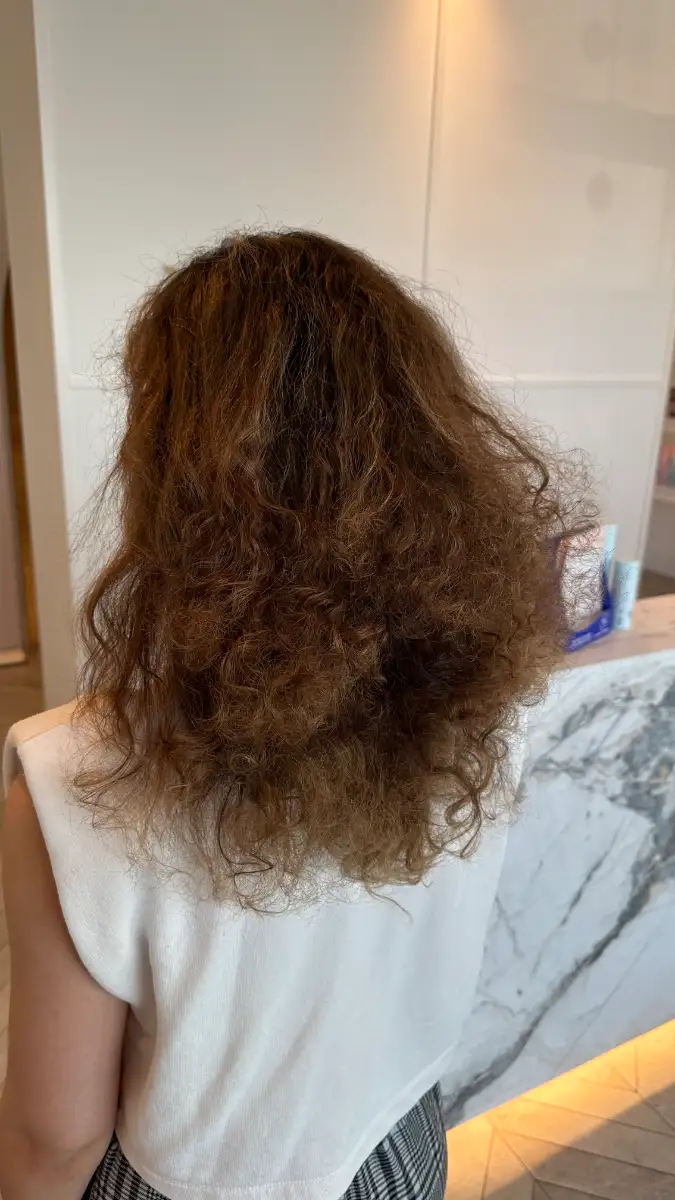
Why Humidity Causes Frizz
Hair is porous. The outer layer, the cuticle, is made of tiny overlapping scales, and those scales respond to moisture in the air. When the air is dry, they lie flat and your hair stays smooth. When the air is humid, which in Vancouver is most of the year, the hair absorbs water molecules from the atmosphere and swells. The scales lift, the strands expand unevenly, and the result is frizz.
The more porous your hair, the more dramatic the effect. Hair that is naturally coarse, curly, colour-treated, or damaged from heat styling absorbs atmospheric moisture faster, which is why some people frizz the instant they step outside while others take longer to notice it.
Why Vancouver Is Especially Hard on Hair
Vancouver's climate is a nearly perfect frizz machine. The city sits in a temperate rainforest, ringed by ocean and mountains, and gets rain on more than half the days of the year. From October through April the air rarely dries out. Even when it is not actively raining, the ambient humidity stays high because of the moisture coming off Burrard Inlet and the Pacific.
For frizz-prone hair, that means almost no relief for two-thirds of the year. Cities with cold, dry winters give hair a break; Vancouver does not. The dampness is relentless and it is the single biggest reason so many people here struggle with frizz that they never had in drier climates.
Does Vancouver Rain Actually Damage Your Hair?
Rain itself does not damage healthy hair in the way that bleach or excessive heat does. What it does is repeatedly swell and shrink the hair shaft as it gets wet and dries out, and over time that constant expansion and contraction can weaken the cuticle, especially on hair that is already porous or colour-treated. Rainwater is also slightly acidic and can pick up pollutants, though for most people the bigger issue is the frizz and the styling frustration rather than long-term structural damage.
The one real risk is the cycle of getting caught in the rain, letting hair air-dry into a frizzy mess, then applying heat to fix it, day after day. It is the heat correction, not the rain, that does the cumulative damage.
What Actually Helps
The goal is to keep atmospheric moisture from getting into the hair shaft in the first place. A few things make a genuine difference.
Seal the cuticle. Smoothing products, leave-in creams, and lightweight oils create a barrier that slows how quickly your hair absorbs moisture from the air. Applied to damp hair before styling, they buy you hours of extra smoothness.
Reduce your hair's porosity. Hydrated, well-conditioned hair absorbs less atmospheric moisture than dry, thirsty hair, because it is not desperate to pull water from wherever it can get it. Regular conditioning treatments and avoiding over-washing both help.
Consider a smoothing treatment. For chronic frizz, a keratin smoothing treatment like Cezanne seals the cuticle at a deeper level and keeps hair manageable in humidity for months at a time. For a lot of Vancouver clients this is the thing that finally ends the daily battle.
Carry an umbrella and mean it. It sounds obvious, but keeping the rain off your hair in the first place is the simplest protection there is.
When to Get Help
If you have tried the products and you are still fighting frizz every single day, it is worth talking to a stylist about a longer-term solution. We deal with Vancouver frizz constantly at both our locations and can recommend an approach based on your specific hair type and how much maintenance you want to take on.
Ready to Book?
Visit us at either of our Vancouver locations. Book online or give us a call.
Book Your Appointment